Conjoint Analysis
Student Consultant, DePaul University
10‑Week Conjoint Analysis
Overview
In this project, we conducted a full conjoint analysis to understand how consumers evaluate robotic vacuum cleaners and which features most strongly influence their purchase decisions. Our goal was to help iRobot identify the product attributes that create the greatest value for customers and determine how future Roomba models can be optimized in a highly competitive and saturated market.
Core Problem
We began by defining the core problem: iRobot wanted to differentiate its Roomba line by adding new features that customers actually care about. To do this, we needed to uncover how consumers make trade‑offs between price, functionality, design, and advanced technology—and which combinations would create the strongest market appeal.
To build the foundation for the study, our team conducted focused interviews, developed an orthogonal design, created a detailed codesheet, and surveyed over 200 respondents. We then analyzed the data using regression modeling to calculate utility values, feature importance, and simulated market share.
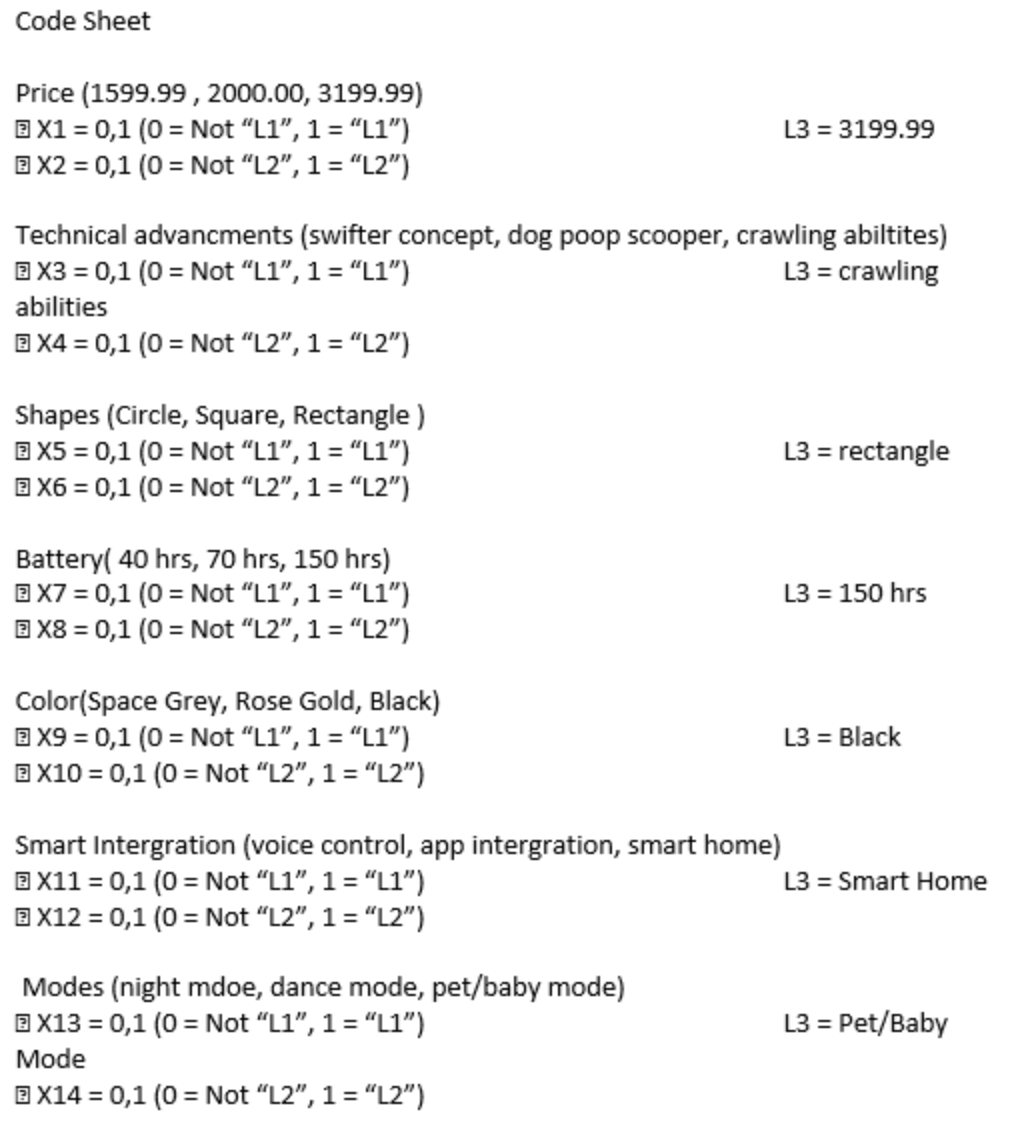
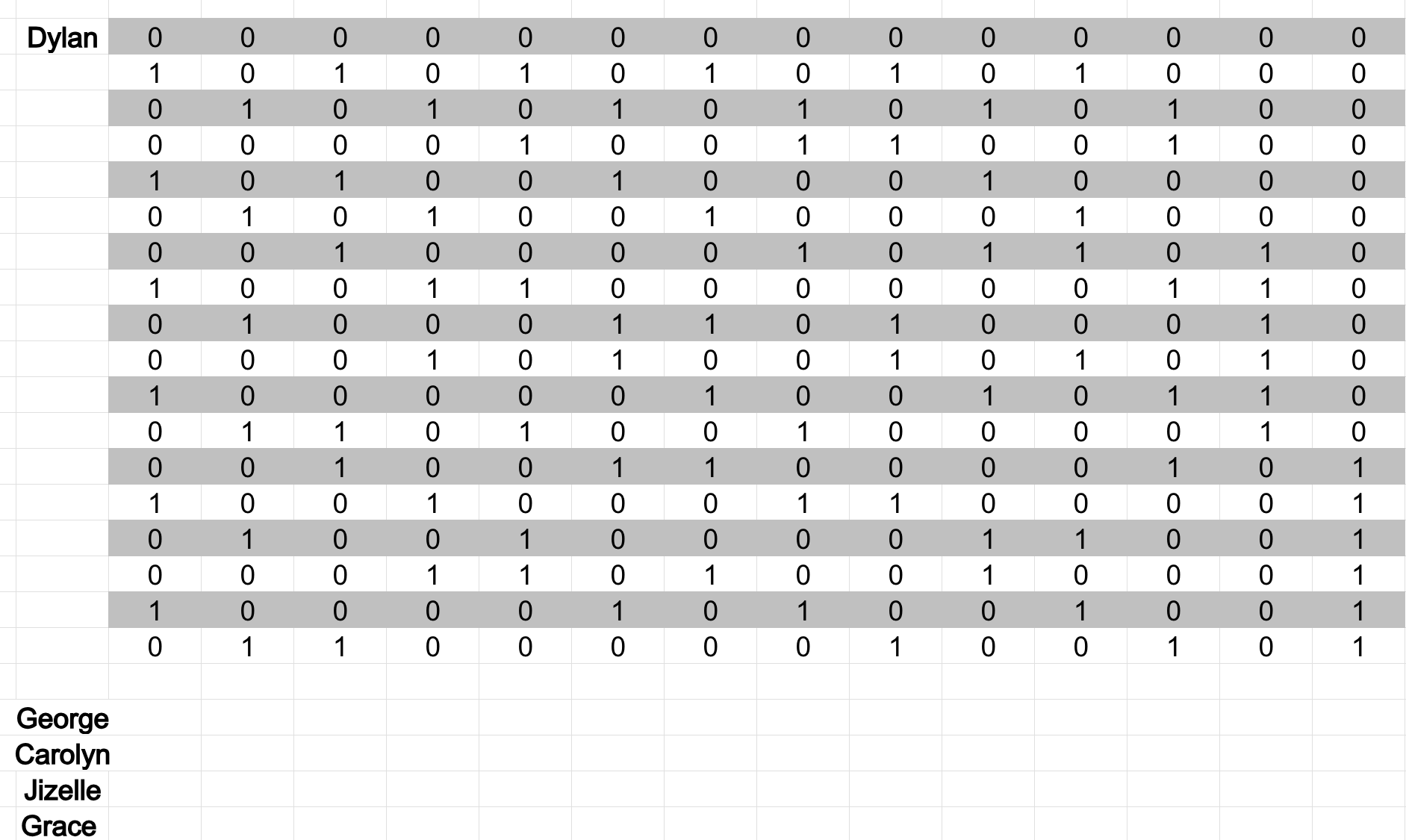
Orthogonal Design

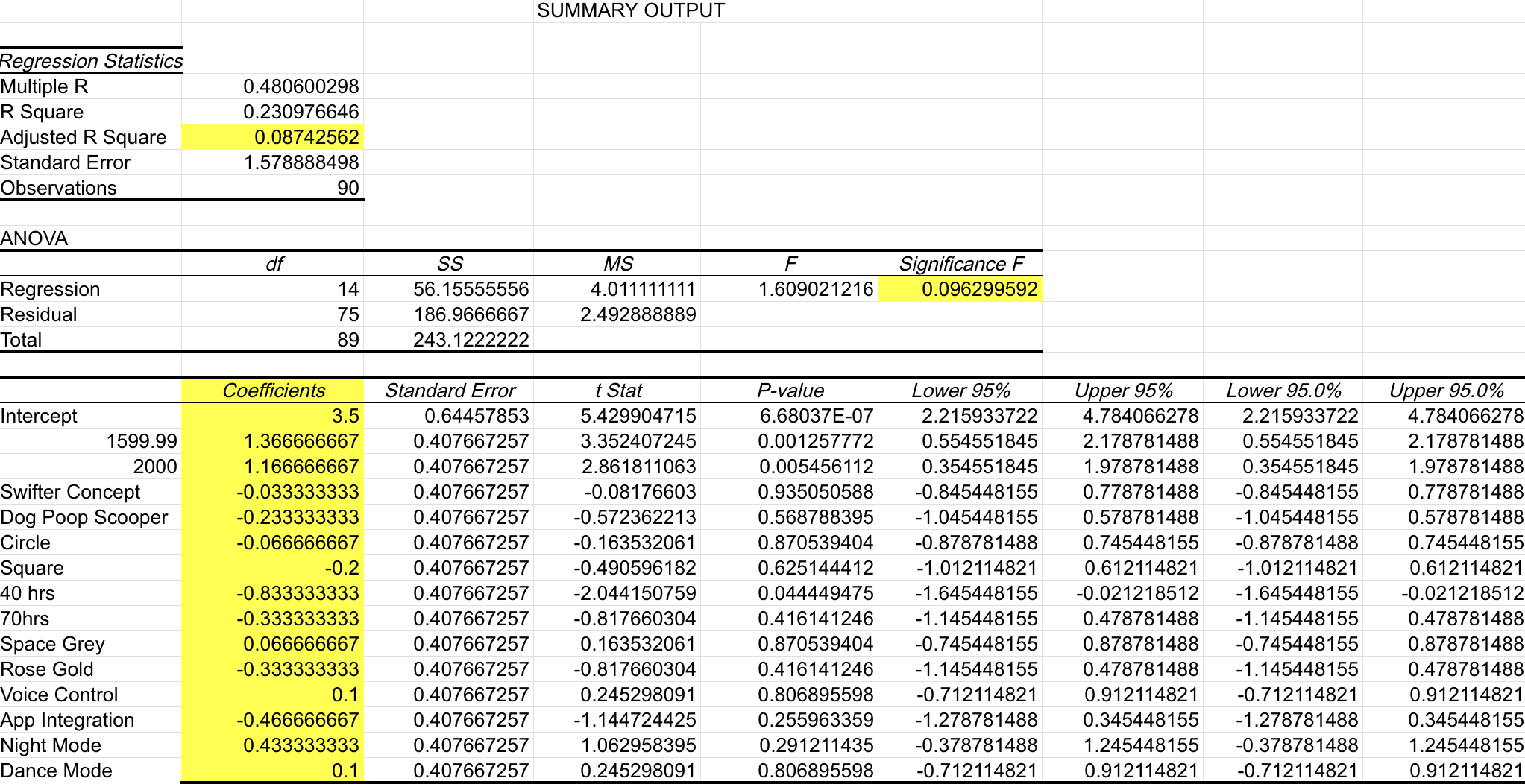
Data revealed
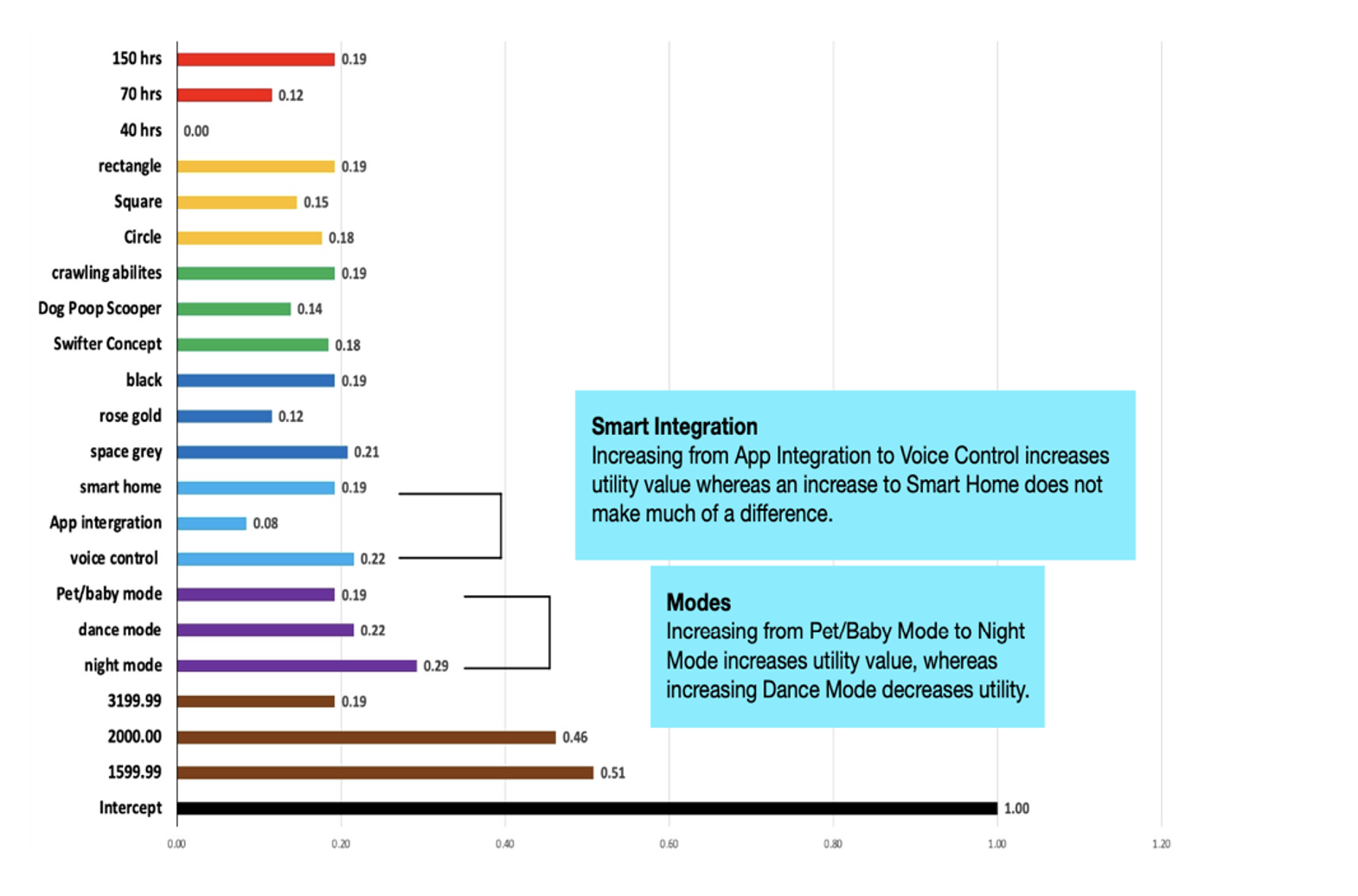
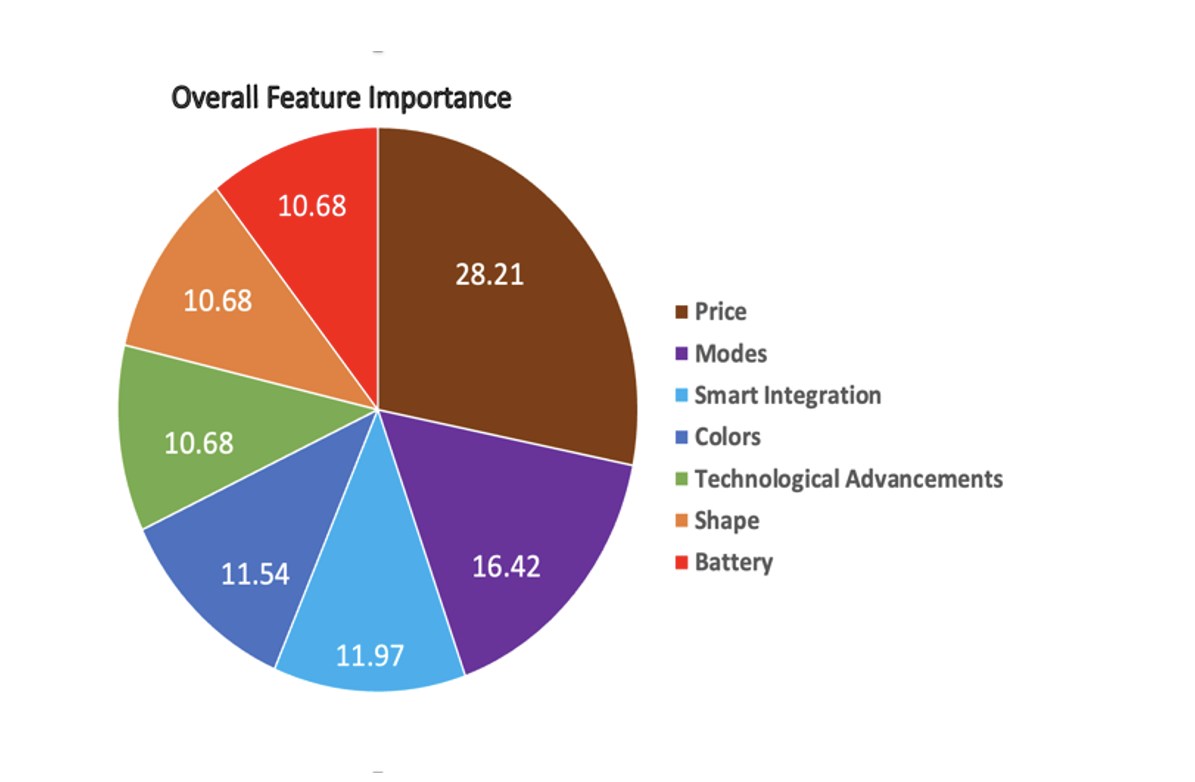
The results revealed a clear pattern in how consumers evaluate robotic vacuums, showing that price is the most influential factor, accounting for more than a quarter of overall feature importance. Consumers also placed strong value on modes, with Night Mode emerging as a top preference because it supports quiet, lifestyle‑friendly cleaning. In the area of smart features, voice control significantly outperformed app integration, indicating a strong desire for hands‑free convenience. Battery life played a larger role than expected, with the longest duration—150 hours—earning the highest utility score among all levels tested. While aesthetic elements such as color and shape contributed to preference, they carried less weight compared to functional features. Interestingly, Dance Mode scored higher than the more practical Pet/Baby Mode, suggesting that consumers sometimes gravitate toward novelty and entertainment even when more functional options are available.
Prioritize high‑utility features
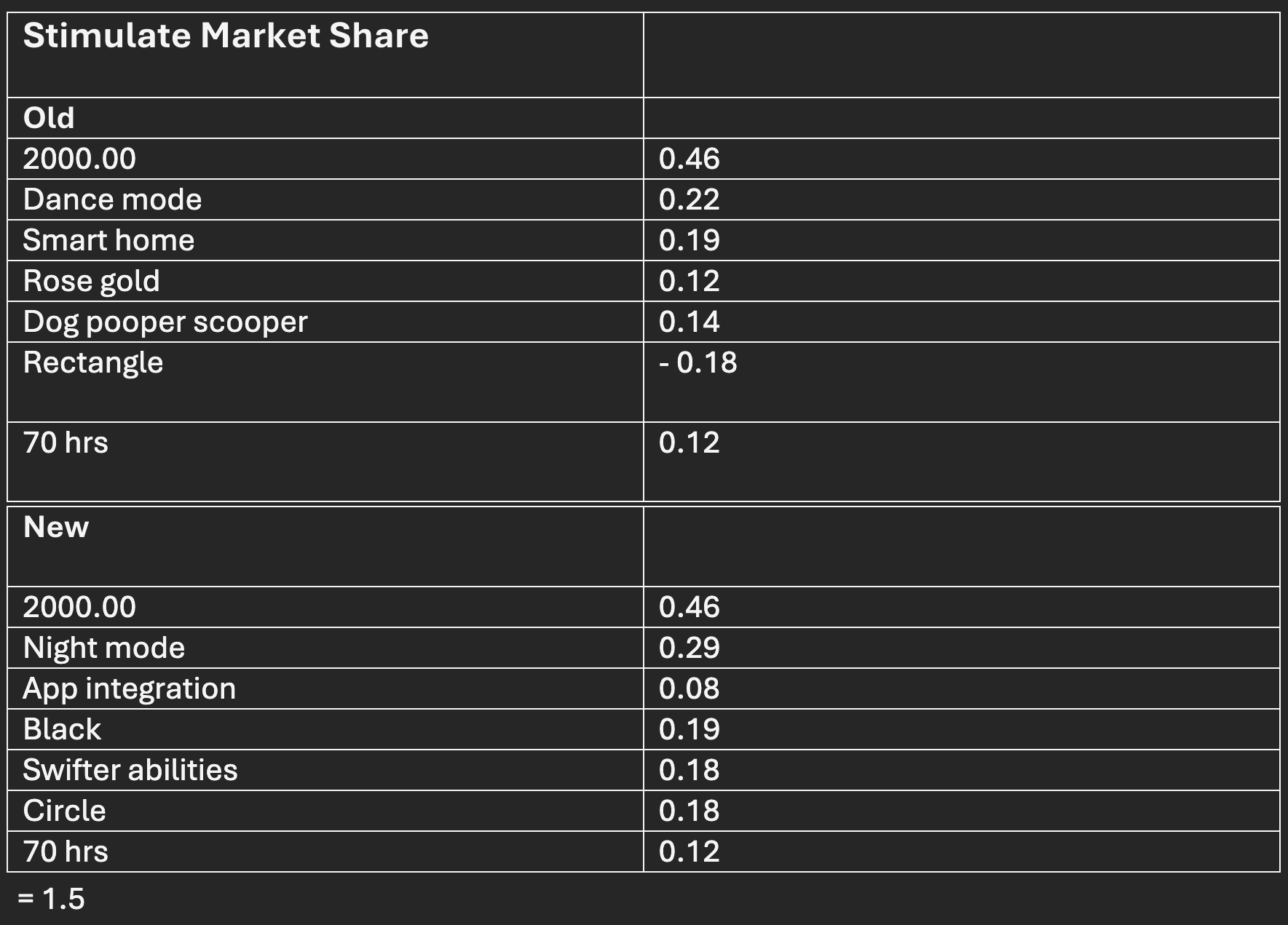
We prioritized the features with the highest utility by focusing on the attributes that delivered the greatest increase in consumer preference while also being realistic for iRobot to implement. Features like Night Mode, Voice Control, and extended battery life consistently produced the strongest utility scores, so these became the foundation of our recommended product design. From there, we evaluated which additional features added meaningful value without driving up unnecessary cost—such as choosing Crawling Abilities over a full rectangular redesign. By centering our decisions on the features that consumers valued most, we were able to build a configuration that maximizes appeal, strengthens competitiveness, and aligns closely with what the market is actually willing to pay for.
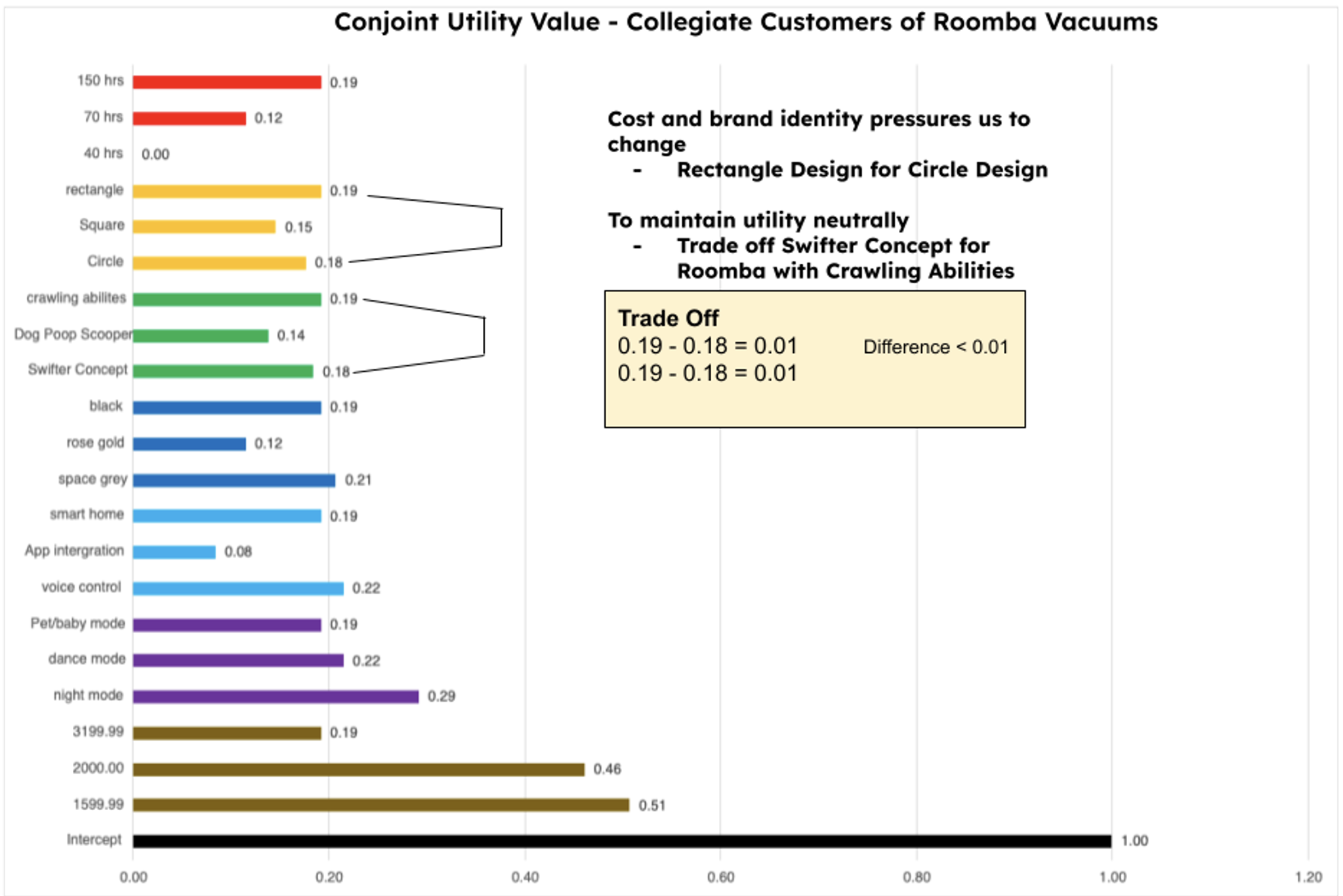
Market Share Simulation
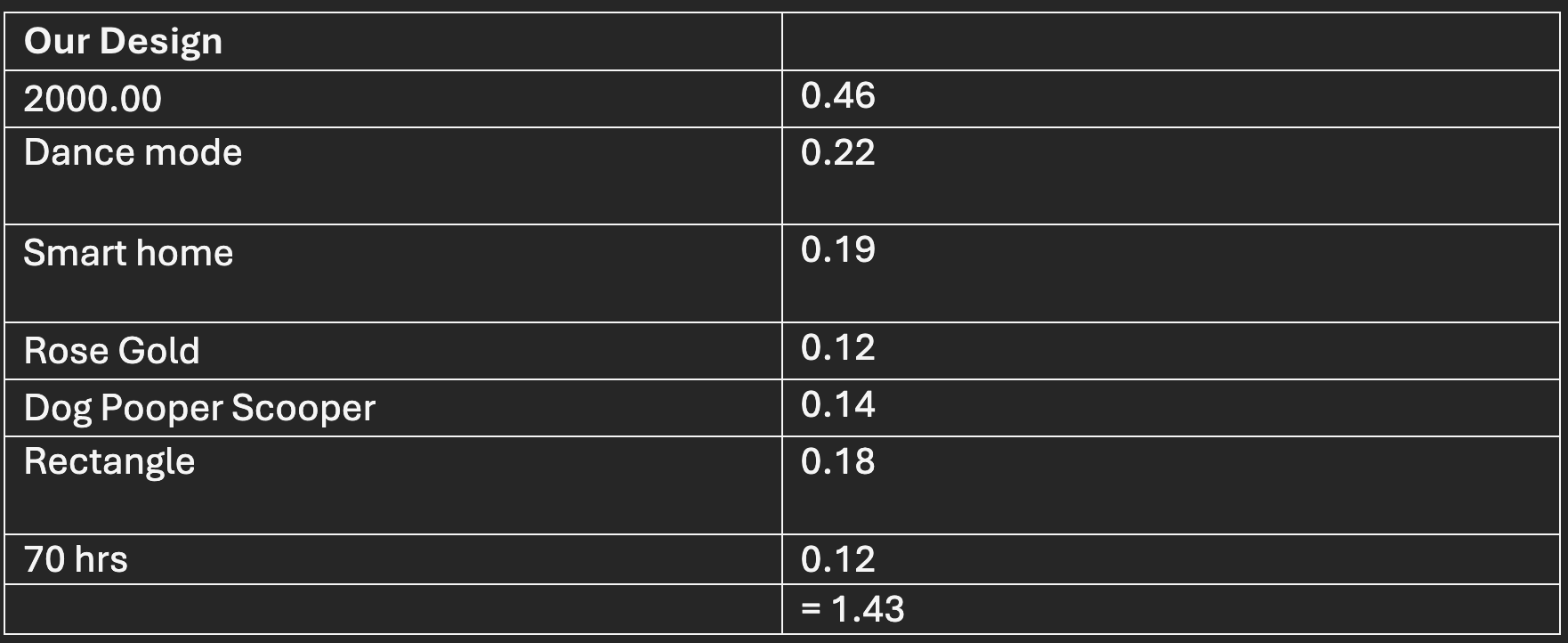
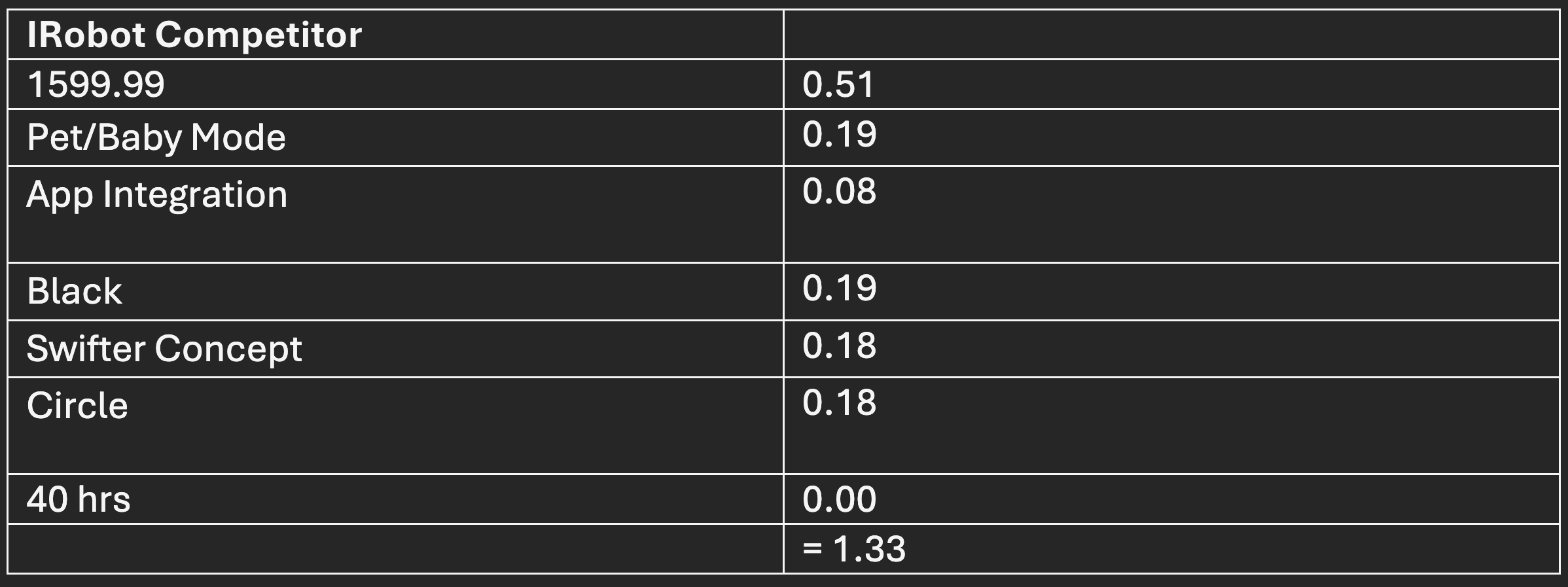
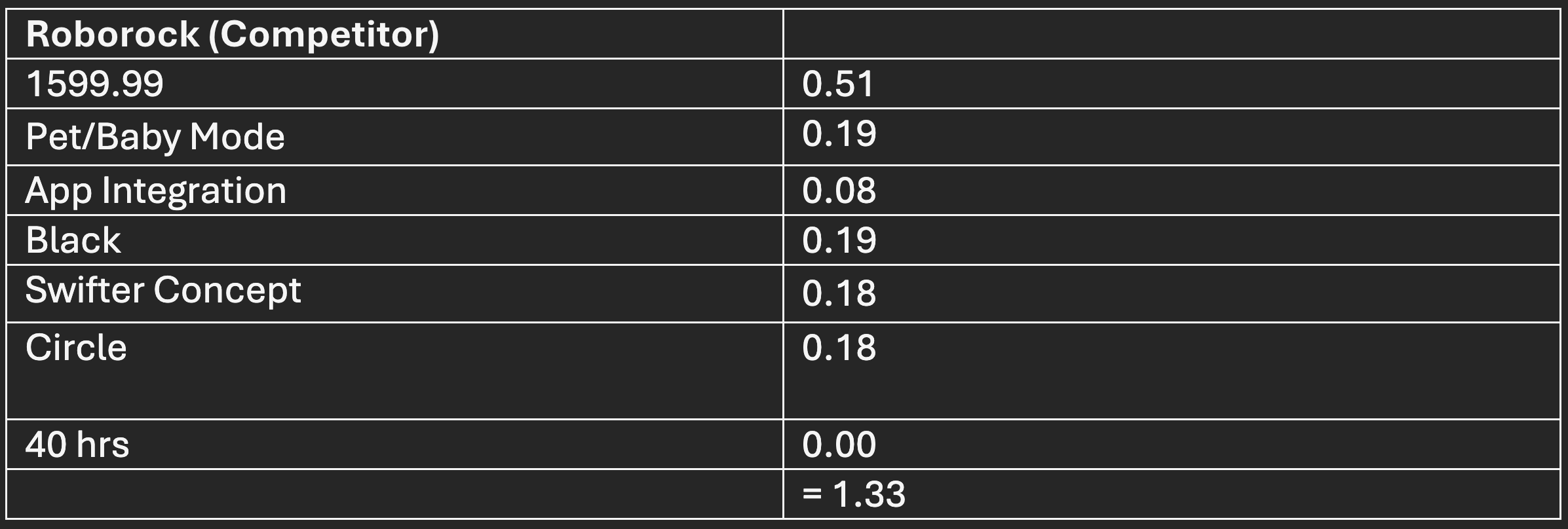
An intercept of 1 indicates a mature market, where significant barriers to entry exist. As seen below our Best TPU was at 1.8 and our worst is 0.87. For a product to succeed we would need above a 1.0 to have a successful outcome. The market share of the best of all worlds came to be 1.43 before our innovative design. Our innovative design had come to a 1.5 barely beating out last but also allowing for maximum revenue and minimal costs. The intercept gives the minimal acceptable TPU. Our having an intercept of 1 tells us we are in a mature market, and we are assured we are above the minimal TPU. Entry barrier value is 1.00 and we are at a 1.5 which means we have created an exceptional t-shirt.